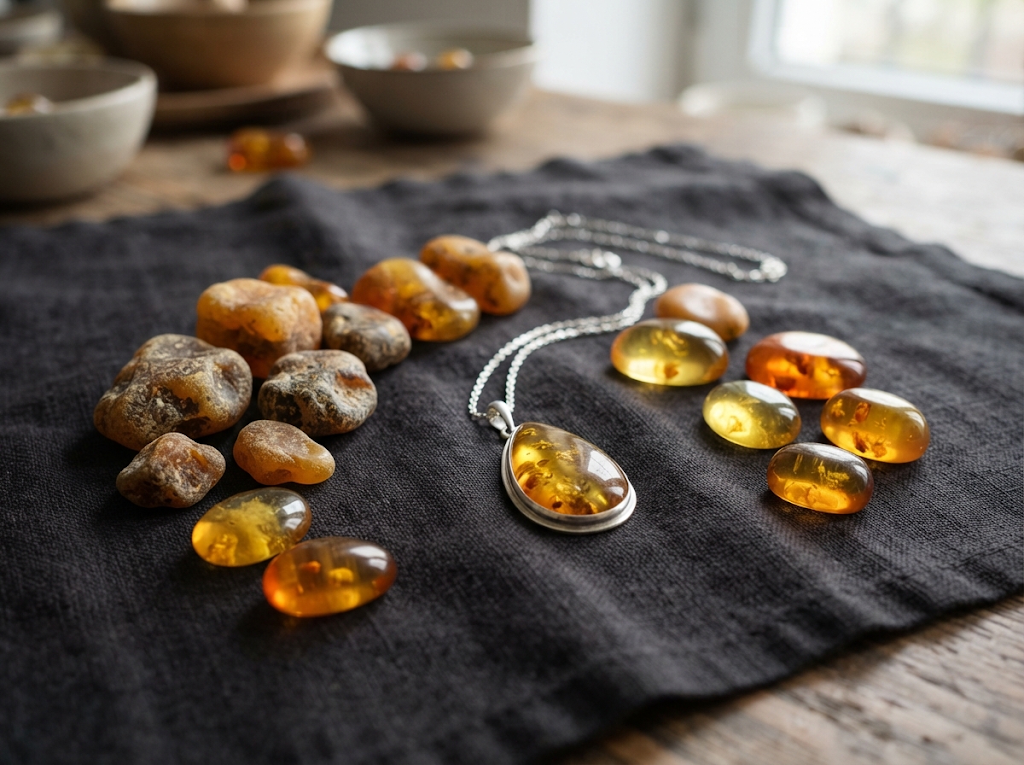
On the Baltic shore near Gdańsk, after a storm, children still walk the beach with their eyes on the sand, looking for a small piece of warm gold. Amber, fossilised tree resin millions of years old, has been worked in Poland for centuries, and the city's workshops now supply necklaces, rings and sculptures to collectors, boutiques and online shops in Britain, the United States, Japan and the Gulf. A jeweller who sells to these customers meets a surprising challenge: customers rarely doubt that the piece is beautiful, but they often doubt that it is real. In the amber trade, the certificate is part of the jewel, because a stone without a trusted description is just a pretty orange object. This guide explains how Polish amber makers and dealers can prepare English documents and product texts.
Why Trust Is the Core Issue
Imitations made of plastic, pressed amber or glass are widely sold. Buyers know this, so they look for signs of honesty: a clear description of the material, the origin, any treatment and the maker. A product page that answers these questions calmly and exactly sets a serious dealer apart from a stall that only sells a story.
Describing the Material Correctly
Use precise terms. Natural Baltic amber, pressed amber, heated or clarified amber, copal and imitation are different things with different values. If a piece contains inclusions, such as insects or plant fragments, describe them and avoid claims about age that you cannot support. State the weight, size and shape, and the metal used in the setting, with its purity. Standards bodies and laboratories, such as the Gemological Institute of America, publish vocabulary and grading methods that many buyers know, and using compatible terms helps your pages be understood.
Certificates, Hallmarks and Records
A certificate of authenticity should list the material, the weight, the dimensions, any treatment, the identification of the piece and the details of the person or laboratory that signs it. Metal parts may carry hallmarks that follow national rules. When you sell abroad, buyers and customs officers may ask for translated versions of certificates, invoices and origin statements. Keep the original Polish and the English translation together, so that the two documents match in every number and name.
Working With Language Experts
Jewellery texts combine technical terms, legal details and a delicate tone. A provider of polish document translation services can translate certificates, workshop records and export papers accurately, and a specialist reviewer can check the vocabulary for stones and metals. Share the glossary of your own terms, such as the names of the cuts and finishes you use, so the translator can keep them stable across catalogues.
Product Descriptions That Sell
Write descriptions that are warm but exact. Mention the colour in words that buyers can imagine, for example honey, cognac or milky, and add a photo in daylight. Explain how the piece feels and how it wears. Avoid false claims about healing powers, since consumer authorities treat them as misleading. For general advice on writing accurate customer-facing texts for products, see this article on GPSR translation requirements.
Photography and Honest Presentation
Amber photographs well, but light changes colour and transparency. Take pictures against neutral backgrounds, show the piece from several angles and include a scale reference. Do not retouch colours so much that the real piece disappoints. A buyer who receives what she saw will leave a good review, and a good review is the best advertising in a small trade.
Export, Customs and Shipping
Jewellery is valuable and small, which makes it a target for theft and a focus for customs. Use insured shipping with tracking, state the value accurately and prepare the commercial invoice with a correct description and tariff code. Include origin statements where the buyer needs them. Explain taxes and duties to your customers, so that nobody is surprised at the door.
Care, Repair and Warranty
Amber is soft and sensitive to heat, perfume and chemicals. Provide a short care guide in English: avoid direct sun, remove before swimming, clean with a soft damp cloth and store separately from harder stones. Explain your warranty and repair services, including who pays shipping. A page with real care advice shows respect for the product and the customer.
Trade Shows and Wholesale
Fairs in Gdańsk and abroad bring buyers from many countries. Prepare a bilingual catalogue with reference numbers, a price list with wholesale terms and a sheet on minimum orders and delivery times. At the stand, staff should be able to explain the difference between natural and pressed amber in two simple sentences, and to show the certificate that goes with the piece.
Story, Heritage and Sustainability
Customers enjoy the story of the Baltic, the beach and the craft, but they also ask how the material is gathered and who benefits. Explain your sourcing honestly, and mention ethical or environmental practices only when you can document them. A modest, factual story is more convincing than a poetic one.
Keep One Master File
Maintain a master data file for each piece or collection, with approved names, descriptions and translations. Update it whenever a product changes, and give it a version date. With careful words and clean records, amber can travel anywhere without losing its glow, or the customer's trust.